
The Status of the Strait of Hormuz as of September 2
The Status of the Strait of Hormuz as of September 2
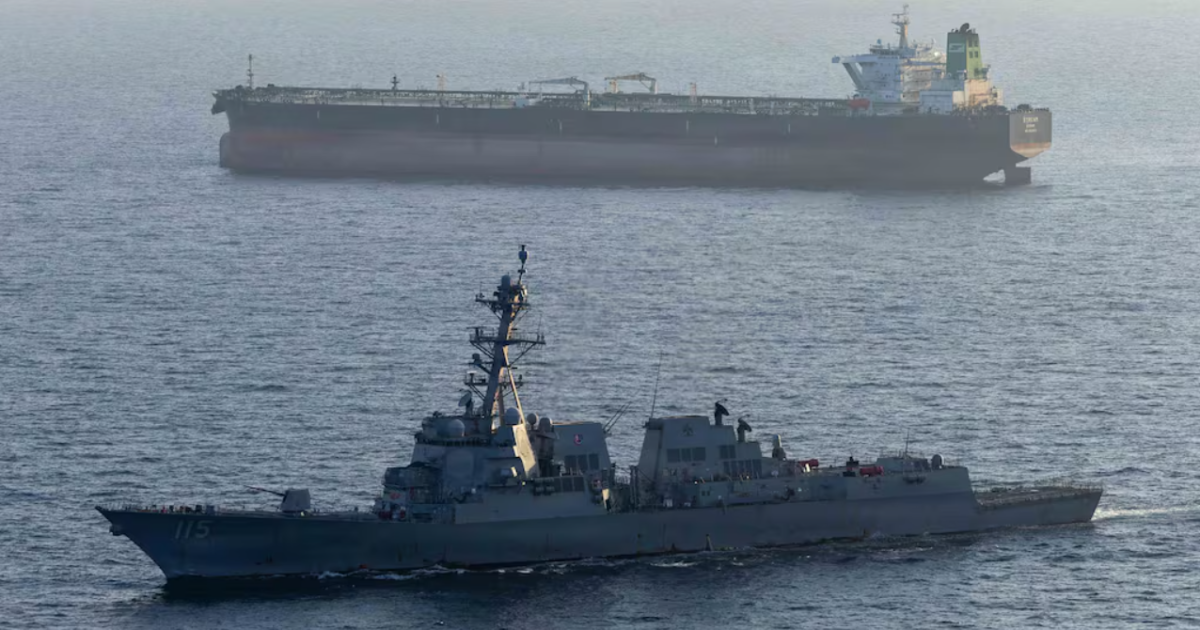
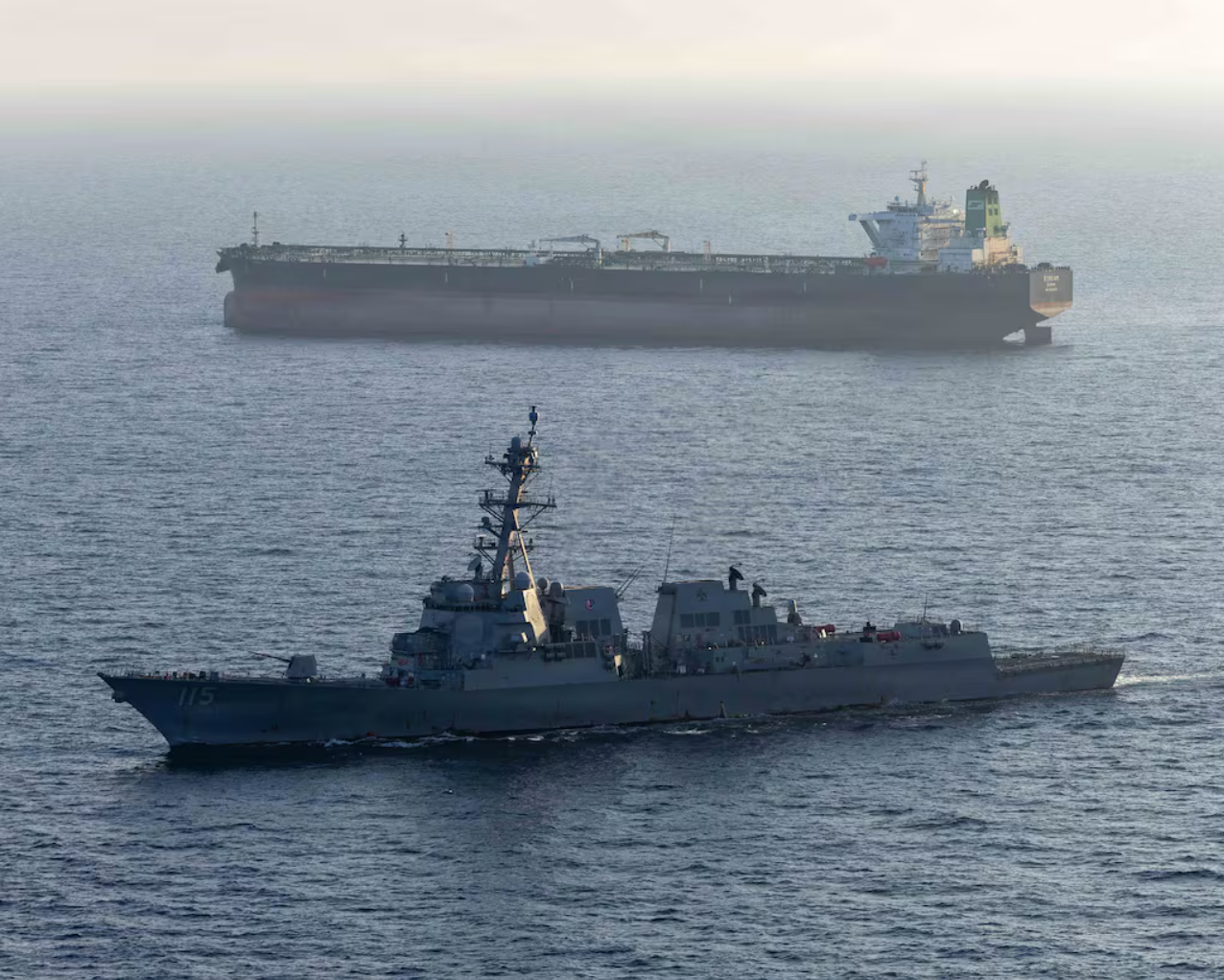
The military conflict between the United States and Iran, now in its seventh month, escalated sharply this week. U.S. Central Command struck Iranian military targets on September 1, following a U.S. attack on IRGC rocket launchers at Larak Island on August 30 and a subsequent widening of the exchange of strikes. Iran retaliated with attacks on U.S.-linked bases in Jordan, the UAE, Bahrain, Kuwait, and Iraq.
The fighting, which began February 28, has centered throughout on control of the Strait of Hormuz, the narrow waterway through which roughly a fifth of the world’s oil once passed daily before Iran began contesting it.
The U.S. imposed a naval blockade of Iranian ports on April 13 after talks in Islamabad aimed at ending the conflict collapsed. This was an economic-pressure measure targeting Iran’s trade and oil exports, distinct from the separate military campaign to clear mines and protect third-party shipping in the strait itself. According to CENTCOM’s own accounting, more than 20 warships have redirected 82 commercial vessels since the blockade restarted on July 14.
Yet, despite the presence of U.S. Navy security, on the evening of August 31, two supertankers, the Bahri-operated Sidr and the South Korean-operated Senegal Prosperity, were struck by unidentified projectiles minutes apart. These were the first attacks on commercial shipping there since CENTCOM declared the lanes clear of mines.
Taken together, the picture is neither of a reopened strait nor a fully closed one. Flows are severely reduced, though no longer at zero, and a growing share of regional oil is bypassing the waterway entirely. Some of these workarounds are benefiting U.S. allies, and many are expected to become permanent even after the conflict ends. This would permanently reduce both the strait’s importance and the IRGC’s ability to use it as leverage over regional oil exports.
According to the U.S. Energy Information Administration, crude oil and petroleum liquids moving through the strait before the conflict averaged 20.4 to 21.6 million barrels per day in the fourth quarter of 2025. That volume fell to 14.6 million barrels per day in the first quarter of 2026 and then to just 4.9 million barrels per day in the second quarter. The EIA’s most recent Short-Term Energy Outlook, released on August 11, with the next update due September 9, assumes shipments will “remain severely constrained through August, with flows slowly increasing in September.”
Separately, as confirmed by the same EIA reporting, Saudi Arabia and the UAE have been actively rerouting crude away from the strait. Saudi Arabia’s East-West pipeline, with a capacity of 7 million barrels per day, carries oil overland to Red Sea ports. The UAE’s Habshan-Fujairah pipeline adds another 1.8 million barrels per day of bypass capacity, with plans to double it.
Combining that roughly 8.8 million barrels per day of bypass capacity with the 4.9 million barrels per day that moved through the strait in the second quarter puts total regional throughput at approximately 13 to 14 million barrels per day. This is still below the pre-conflict baseline of roughly 20 million barrels per day, but it is much better than the situation just a few short weeks ago.
Treasury Secretary Scott Bessent said this week that oil pipelines would bypass the strait entirely within two years, making it “a worthless piece of water.” President Trump, for his part, used the moment to float renaming the waterway “Trump Strait” in a Wednesday-morning social media post, days after signing an order renaming Lake Ontario “Lake America.”
Estimates of the economic toll on Iran vary by source. FDD’s Center on Economic and Financial Power put the total economic damage at approximately $144 billion, or roughly 40% of Iran’s pre-war GDP, with a plausible range of $50 billion to $300 billion. It attributed two-thirds of the damage to the U.S.-Israeli air campaign and one-third to the U.S. naval blockade.
The campaign’s most consequential strikes reportedly hit Iran’s petrochemical hubs at Mahshahr and Assaluyeh, including a March 18 strike on the South Pars complex, which accounted for more than 48% of Iran’s pre-war petrochemical output. Iranian government spokesperson Fatemeh Mohajerani put the total direct and indirect damage even higher, at approximately $270 billion. That is close to the IMF’s estimate of Iran’s entire 2026 GDP of roughly $300 billion.
The economic strain is evident in Iran’s currency and inflation data. The rial fell to a record low of two million to the U.S. dollar in August, while year-over-year inflation reportedly reached 84%. Iranian state-affiliated media reported that real wages have more than halved over the past decade, with the base wage falling to the equivalent of $83 per month. U.S. strikes on Tehran’s petroleum storage and distribution infrastructure, combined with the naval blockade, have been linked to fuel shortages and long lines at gas stations in the capital.
Casualty figures diverge sharply depending on the source, and the cumulative toll has grown substantially since the conflict’s opening days. Iran’s Foundation of Martyrs and the independent Human Rights Activists News Agency (HRANA) have put the cumulative number killed at between 3,468 and 3,636. U.S. and Israeli estimates put the toll at 6,000 or more. Estimates of the number injured range from 15,000, according to U.S. and Israeli figures, to 26,500, according to Iran’s Health Ministry.
Claims that Iran has requested negotiations are not clearly supported by the current record. In mid-August, Iran officially denied allegations that it had conducted back-channel talks with the U.S. through Kurdish intermediaries in Iraq. An IRGC spokesperson dismissed the claims as “fantasies from defeat and desperation.”
Monday, August 17, also marked the end of the 60-day ceasefire and negotiation window established by the Pakistani-mediated Islamabad Memorandum of Understanding, signed in June. Separately, Pakistan reported “significant progress” in its mediation effort as of August 25, after Pakistan’s army chief and interior minister met with Iranian President Masoud Pezeshkian in Tehran.
However, no direct U.S.-Iran talks are currently underway. President Trump has said he does not expect Iran to agree to the terms he considers necessary, reiterating that Iran cannot be permitted to obtain a nuclear weapon.
The post The Status of the Strait of Hormuz as of September 2 appeared first on The Gateway Pundit.
Go to Source
Author: Antonio Graceffo